

That is where the search term “tips and tricks impocoolmom” becomes interesting. ImpoCoolMom appears online as a lifestyle and parenting-oriented idea centered on practical solutions for family life, organization, routines, and everyday challenges. Its own website describes the project as a place for practical tips, everyday hacks, and ideas for making life simpler.
But there is an important distinction worth making: ImpoCoolMom is not a recognized parenting method or an official child-development framework. The useful part is the style of thinking behind the term—small, realistic changes that can make family routines easier.
And honestly, that is probably the part worth keeping.
What Does “Tips and Tricks ImpoCoolMom” Actually Mean?
There is no universally established definition of “ImpoCoolMom” in parenting research. Online, the term is generally used around practical motherhood, family organization, parenting shortcuts, household routines, and ways to make everyday responsibilities less overwhelming. The ImpoCoolMom website itself presents its content around everyday hacks, time-saving strategies, family life, and practical advice.
So rather than treating ImpoCoolMom as a strict parenting philosophy, I would look at it as an approach to everyday problem-solving.
The basic idea is simple:
- Find the part of the day that repeatedly causes friction.
- Make the task easier to understand or repeat.
- Remove unnecessary decisions.
- Give children responsibilities that match their age.
- Keep routines flexible enough to survive real life.
- Choose consistency over perfection.
That last point matters more than it sounds.
A routine that works reasonably well five days a week is usually more useful than an elaborate routine that looks perfect on paper but becomes impossible to maintain.
Start With the Moments That Cause the Most Chaos
One mistake people make with family organization is trying to fix everything at once.
You do not need a color-coded system for the entire house.
Start by noticing where time disappears.
Maybe mornings are difficult because everyone is looking for school items. Perhaps dinner becomes stressful because nobody knows what is being cooked. Maybe bedtime stretches for an hour because the same five instructions have to be repeated every night.
Pick one recurring problem.
Then build a small solution around it.
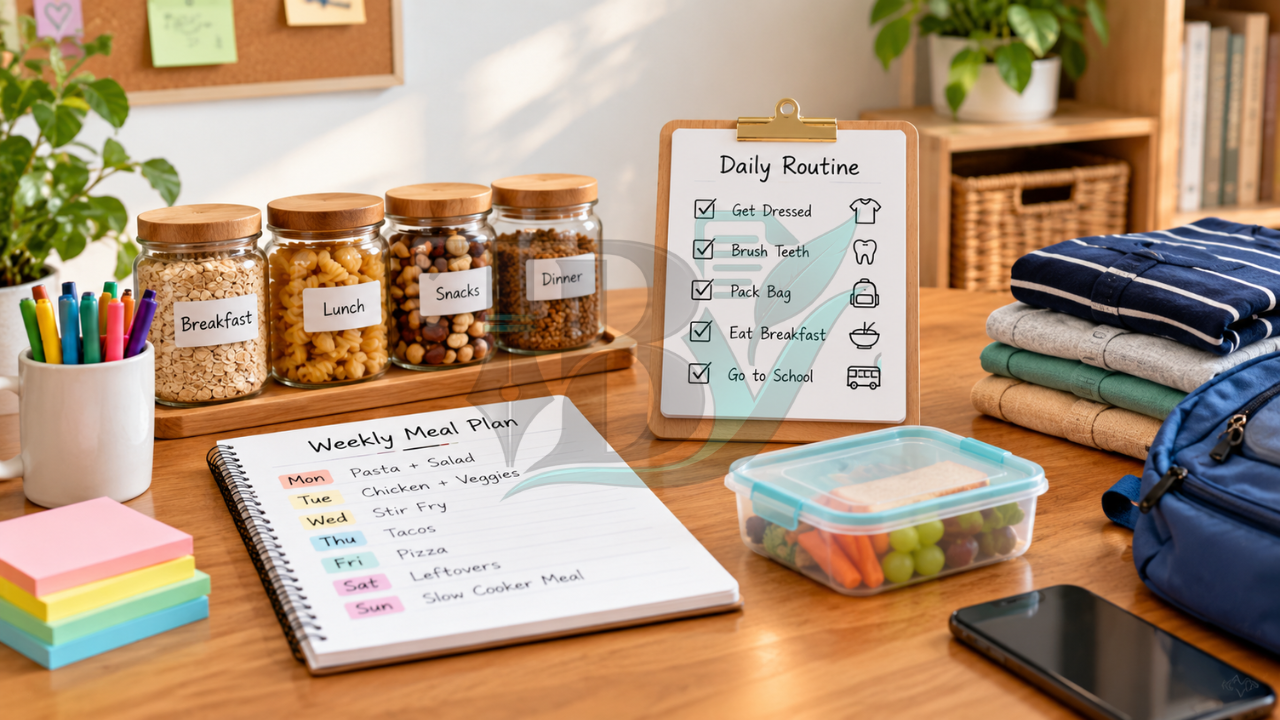
For example, a simple evening preparation routine could involve:
- Choosing clothes for the next morning.
- Putting school bags near the door.
- Preparing lunch items that can safely be prepared ahead.
- Checking the next day’s calendar.
- Putting keys and frequently needed items in one place.
This is not revolutionary. That is exactly why it can work.
The CDC recommends predictable routines and consistent follow-through because structure helps children understand what to expect and helps parents respond more consistently.
The Best ImpoCoolMom Trick May Be Reducing Decisions
Family life contains hundreds of tiny decisions.
What should we eat?
Where are the shoes?
When should homework happen?
Who is responsible for cleaning this?
Did anyone pack the water bottle?
Instead of making each decision from scratch, create a few defaults.
For example, you could establish:
| Everyday problem | Simple default system | Why it helps |
|---|---|---|
| School items | One designated spot near the exit | Less searching in the morning |
| Weeknight meals | A short rotating meal list | Less daily meal planning |
| Toys | Fewer toys available at one time | Easier cleanup |
| Homework | Same general time and location | Creates predictability |
| Bedtime | Same sequence most nights | Children know what comes next |
| Family calendar | One shared visible calendar | Fewer forgotten commitments |
Notice what these ideas have in common: they do not require expensive products.
The real “hack” is often making the next action obvious.
Create Routines, Not Rigid Schedules
There is a difference between a routine and a timetable.
A timetable might say:
7:00 wake up
7:10 breakfast
7:25 get dressed
7:40 leave home
That can work for some families, but life rarely respects the clock perfectly.
A routine is more forgiving:
Wake up → bathroom → clothes → breakfast → teeth → bag → leave
The sequence remains familiar even if the exact times change.
This approach can be particularly useful with younger children. The CDC notes that routines help children know what to expect and recommends keeping routines simple, predictable, and appropriate for the child’s abilities.
For younger kids, visual reminders can also help. A small chart with pictures for brushing teeth, getting dressed, eating breakfast, and putting on shoes may be easier to follow than repeatedly giving verbal instructions.
Give Children Small Jobs Instead of Doing Everything Yourself
One of the most useful shifts in practical parenting is moving from “I need to get this done” to “How can my child gradually learn to do this?”
That does not mean handing a five-year-old a giant list of household responsibilities.
It means giving children manageable jobs.
Depending on age and ability, that might include:
- Putting toys back into a basket.
- Placing dirty clothes in the laundry area.
- Carrying their own school bag.
- Helping set the table.
- Choosing between two appropriate outfits.
- Putting books back after reading.
- Helping prepare simple parts of a meal.
The CDC specifically recommends allowing young children to help with simple chores and giving them limited, age-appropriate choices.
There is another benefit here that is easy to overlook: children begin to see the home as something they participate in, rather than a place where an adult magically handles everything.
That can make everyday cooperation easier over time.
Use “Do This Instead” When Correcting Behavior
A surprisingly common parenting trap is telling children what not to do without explaining what they should do instead.
“Don’t run.”
“Don’t shout.”
“Don’t touch that.”
“Stop fighting.”
Sometimes those instructions are necessary, especially when safety is involved. But children also need a clear alternative.
Try:
- “Walk beside me.”
- “Use your quiet voice.”
- “Put that back and choose this one.”
- “Tell your brother you want a turn.”
This is consistent with CDC guidance encouraging parents to explain expected behavior and, when saying no, follow it with what the child should do instead.
It does not eliminate challenging behavior. No parenting trick can do that.
What it does is make the expected behavior clearer.
Praise the Specific Thing You Want Repeated
Generic praise is nice, but specific praise gives children more information.
Instead of:
“Good job.”
Try:
“You put your toys away without being reminded.”
Or:
“I noticed you waited for your sister to finish speaking.”
Or:
“You remembered your school bag today.”
The child now knows exactly what behavior you noticed.
CDC guidance recommends specific praise as part of consistent parenting strategies, particularly when encouraging desired behaviors.
This also makes praise feel less automatic. You are not simply saying something positive because you think you should. You are showing the child which action made a difference.
Make the Kitchen Easier Before You Make It Fancy
Meal planning is another area where “life hacks” can become unnecessarily complicated.
You do not need a refrigerator covered with elaborate weekly charts if that system makes you hate meal planning.
A simpler approach is to create a small collection of dependable meals.
For example:
- Two very quick meals for exhausting evenings.
- Two family favorites.
- One leftovers-friendly meal.
- One meal that can be prepared in a larger batch.
- One flexible “use what we have” night.
The goal is not culinary perfection.
The goal is having something to fall back on when the day goes sideways.
You can also keep a short running grocery list rather than trying to remember everything during one weekly shopping trip. If multiple adults manage the household, a shared list can prevent duplicate purchases and forgotten essentials.
Make Cleanup a Short Event
“Clean the whole house” is a terrible instruction because it sounds enormous.
A five-minute reset is easier.
Choose a small window—after dinner, before bedtime, or whenever your household naturally slows down.
Everyone handles a small area:
- Toys go into baskets.
- Shoes return to their usual place.
- Dishes move toward the kitchen.
- Books go back on the shelf.
- Random objects return to their rooms.
The house may not become spotless.
That is fine.
The objective is to prevent small amounts of disorder from becoming a much larger job later.
For children, the routine can become part of the day rather than a punishment for making a mess.
Do Not Confuse “Cool Mom” With “Perfect Mom”
This is probably the most important idea behind the useful side of the ImpoCoolMom concept.
Being a capable parent does not mean having a perfectly organized home, preparing every meal from scratch, planning every activity, or staying calm every second of every day.
Parenting is demanding. The American Psychological Association notes that parents can experience significant stress and potential burnout, and that managing parental stress deserves attention rather than being treated as a personal failure.
So a practical parenting system should leave room for bad days.
Sometimes dinner will be simple.
Sometimes the laundry will wait.
Sometimes the planned activity will be abandoned because everyone is tired.
Sometimes the best parenting decision is to simplify the evening.
I would argue that flexibility is not the opposite of good organization. It is part of good organization.
Build Family Habits Around Health, Not Just Productivity
It is easy for parenting hacks to become focused entirely on getting more done.
But children need more than efficient mornings.
Healthy routines also include sleep, movement, food, play, conversation, and time together. The CDC identifies nutrition, physical activity, sleep, family interaction, and a safe and loving environment as important parts of healthy child development.
A practical family routine might therefore include:
- Regular sleep and wake times where possible.
- Daily opportunities for movement.
- Reading or talking together.
- Time without constant digital distractions.
- Age-appropriate household responsibilities.
- Regular family meals when schedules allow.
- Unstructured play.
The point is not to turn family life into a performance tracker.
These habits should support family life, not dominate it.
A Better Way to Handle Screen-Time Battles
Screens are often treated as a problem that needs one perfect solution.
Realistically, the better question is: What role should screens have in this particular household?
Instead of arguing about every individual request, establish simple expectations.
For example:
- Where devices can be used.
- When they are put away.
- What happens before recreational screen time.
- Which areas of the home are screen-free.
- What children should do when screen time ends.
Rules should be clear enough that children know what is expected.
The CDC recommends clear family rules, consistency between caregivers, reminders, praise for appropriate behavior, and predictable consequences.
The same principle applies to technology as it does to toys, bedtime, homework, or household chores.
Predictability usually works better than constantly renegotiating the same argument.
Keep a “Bad Day” Version of Your Routine
This is one of the most practical ideas I would add to any collection of tips and tricks impocoolmom.
Create two versions of important routines:
Normal day: the complete version.
Difficult day: the minimum version.
For example, a normal evening might include cooking dinner, cleaning the kitchen, helping with homework, bathing, reading, and preparing for tomorrow.
The difficult-day version might simply be:
Easy dinner → essential cleanup → hygiene → prepare school items → bedtime
That is not laziness.
It is a backup plan.
Having a simpler version prevents one difficult day from turning into a feeling that the entire household system has failed.
The “One Small Fix” Rule
If you want to try these ideas without overwhelming yourself, use one rule:
Fix one recurring problem at a time.
Suppose mornings are the issue.
Do not simultaneously redesign meals, laundry, bedtime, homework, toys, and the family calendar.
Start with the morning.
Ask:
- What causes the biggest delay?
- What can be prepared the night before?
- What can the children reasonably do themselves?
- What item is constantly getting lost?
- What instruction has to be repeated every morning?
Solve that problem.
Then live with the change for a week or two.
If it genuinely makes life easier, keep it.
If it creates more work than it removes, change it.
That is a much more realistic way to build a household system.
Common Mistakes When Trying Parenting Hacks
Not every “hack” deserves a permanent place in your routine.
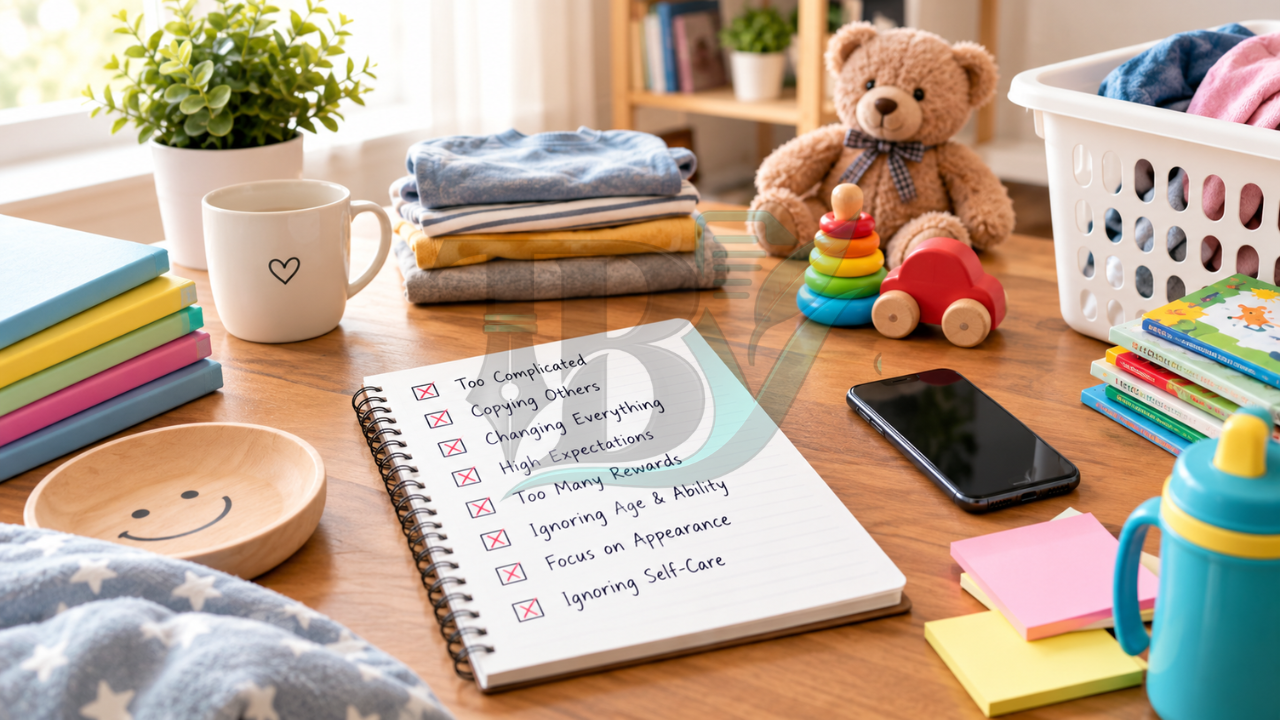
Watch for these problems:
- Making the system too complicated: If you need a tutorial to remember your own routine, simplify it.
- Copying another family’s schedule: Children, jobs, homes, and support systems differ.
- Changing everything at once: You will not know which change helped.
- Expecting instant cooperation: Children need repetition and reminders.
- Using rewards for every little task: External rewards can become difficult to maintain.
- Ignoring age and ability: A useful task for a ten-year-old may be inappropriate for a toddler.
- Prioritizing appearance over function: An Instagram-worthy system is not automatically a useful one.
- Treating exhaustion as failure: Sometimes the correct solution is simply doing less.
The CDC’s parenting resources repeatedly emphasize age-appropriate expectations, consistency, predictable routines, and positive guidance rather than one-size-fits-all formulas.
Frequently Asked Questions
What are tips and tricks impocoolmom?
The phrase generally refers online to practical parenting and lifestyle ideas associated with the ImpoCoolMom concept, including organization, routines, household shortcuts, parenting strategies, and ways to make everyday family life easier. It is better understood as a lifestyle-style idea than as a formal parenting method.
Is ImpoCoolMom an official parenting program?
There is no evidence that ImpoCoolMom is an established clinical or academic parenting framework. The term is primarily used online in lifestyle and parenting content. For child-development or health questions, parents should rely on qualified professionals and established sources such as the CDC or pediatric organizations.
What is the easiest ImpoCoolMom-style hack to start with?
Start with one predictable routine. A simple evening preparation routine—putting school items together, preparing clothes, and checking the next day’s commitments—can remove several small decisions from a busy morning.
How can I make children more independent?
Give children small responsibilities that match their age and abilities. Let them participate in routines such as tidying toys, putting away belongings, choosing between limited options, or helping with simple household tasks. Independence develops gradually rather than appearing after one perfect system.
Do parenting hacks really reduce stress?
They can reduce unnecessary friction when they simplify recurring tasks, but no hack can remove the normal demands of parenting. The most useful systems tend to be simple, repeatable, and flexible. Parents also need time for rest and support; parental stress should not simply be treated as something to “hack away.”
Should I follow the same routine every day?
Not necessarily. Consistency is useful, particularly for children, but routines should still allow for weekends, holidays, illness, travel, and unexpected changes. A good routine provides structure without becoming so rigid that one disruption ruins the entire day.
Final Thoughts
The most useful lesson behind tips and tricks impocoolmom is not a particular basket, schedule, recipe, or parenting shortcut.
It is the idea of making ordinary family life a little easier through small, repeatable decisions.
Prepare something before it becomes urgent. Give children responsibilities they can actually handle. Make expectations clear. Keep routines predictable. Leave room for imperfect days.
What stands out to me most is that none of this requires becoming a “perfect mom.” In fact, chasing perfection can make family life harder. A practical system should give you more breathing room, not another list of things to feel guilty about.
Also Read: Improve Software Meetshaxs: What Should Actually Be Improved?

